


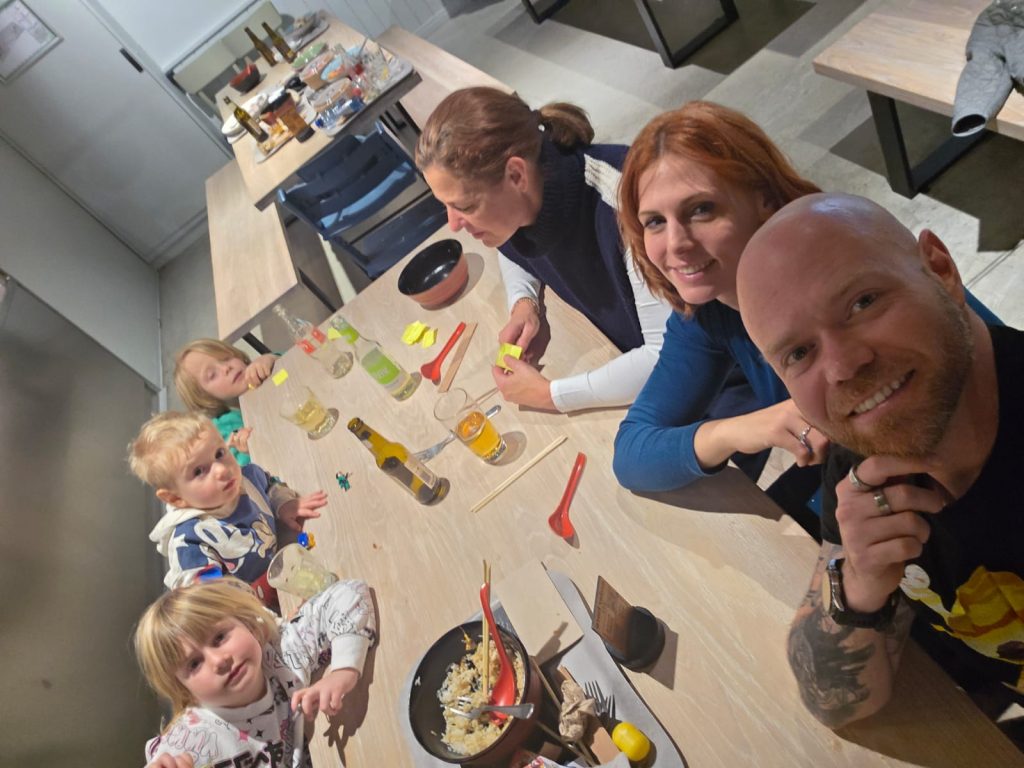
Last weekend we were near the central station in Zurich. It was raining, the kids were full of pent-up energy, and as parents we were already halfway to our patience limit.
We walked into Bridge almost by chance.
A spacious setting, plenty of different food options, an informal atmosphere. But the real surprise was the integrated play area. The children started moving, laughing, jumping. No one annoyed. No judgmental looks.
We stayed there for a couple of hours without stress.
For an expat family, that’s not a small detail. It’s a small victory.
Living in Zurich Without a Family Network
Zurich is an extraordinarily organized, safe, and efficient city. But for many expat families, one fundamental element is missing: a spontaneous support network.
No grandparents nearby.
No “I’ll take them for an hour.”
No last-minute solutions.
This radically changes the daily mental load.
Every outing requires planning. Every weekend needs structure. Even leisure time becomes part of a broader family management strategy.
Over time, this constant level of responsibility keeps the nervous system in a higher state of activation than usual. It’s not necessarily negative stress, but it is continuous adaptation. And adaptation consumes energy.
Why Family-Friendly Spaces Are Well-Being Tools
Places like Bridge aren’t just convenient restaurants. They are regulation spaces.
When children can move safely and independently, parents can lower their level of vigilance. That shift isn’t only psychological — it’s physiological.
Less muscle tension.
Slower breathing.
Reduced cortisol levels, the stress hormone.
Even thirty minutes without having to monitor every movement can significantly change the quality of a day.
In the expat context, building a personal map of “parent-safe” places becomes an essential part of family well-being. It’s not only about convenience — it’s about long-term sustainability.
Integration Also Means Finding Your Own Spaces
We often think integration happens only through language or bureaucracy. In reality, it also happens like this: finding places where you feel welcomed, not just tolerated.
Where children can be children.
Where parents can breathe.
These micro-experiences build a tangible sense of belonging. They make the city not only efficient, but emotionally livable.
And when you live far from your home country, that difference carries weight.
Davide and I work every day with expat families around these themes.